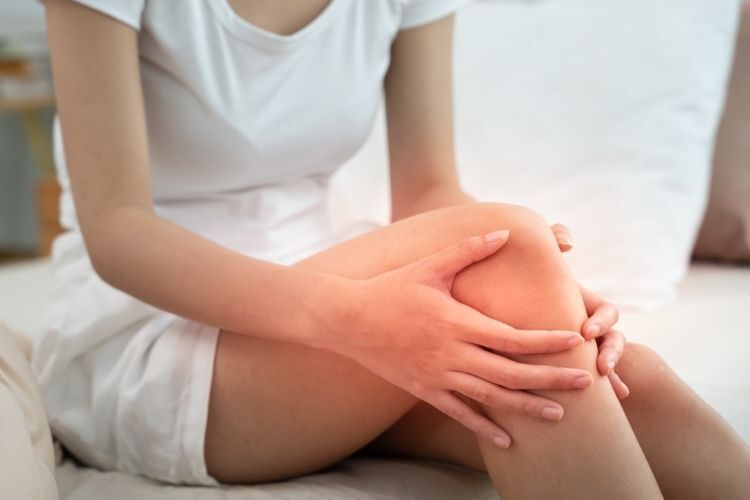
Knee bursitis has a way of sneaking up on active people. One day your knee feels fine. The next, it's puffy, warm, and tender every time you kneel, squat, or climb stairs.
It develops when one of the small fluid-filled sacs around the joint becomes irritated and inflamed. Most cases respond well to the right mix of load management and targeted rehab. At Kinetic Spine & Rehab in Rockville, MD, we help athletes and active adults work through bursitis of the knee and get back to training. This guide covers what it feels like, why it happens, and what a smart recovery plan looks like.
What Is Knee Bursitis?
Bursae are small, slippery sacs that cushion tendons, muscles, and skin where they pass over bone. Your knee has several. When one is irritated by pressure, friction, or a direct blow, it produces extra fluid and swells. That swelling is bursitis.
Common Types of Bursitis in the Knee
- Prepatellar bursitis: in front of the kneecap, often from kneeling
- Infrapatellar bursitis: just below the kneecap, linked to kneeling and jumping
- Pes anserine bursitis: on the inner knee below the joint, common in runners and cyclists
Knee Bursitis Symptoms to Watch For
The hallmark is localized swelling and tenderness over a specific spot. Other common signs include:
- A visible, soft bump over or around the kneecap
- Pain when kneeling, climbing stairs, or pressing on the area
- Warmth and mild redness
- Stiffness after sitting or first thing in the morning
Bursitis usually feels like a tender, puffy spot. Ligament and meniscus injuries more often cause catching, locking, or a feeling that the knee gives way. An exam is the only reliable way to tell them apart.
When Bursitis Becomes Urgent: Septic Bursitis in the Knee
Swelling with fever, chills, spreading redness, intense warmth, or a recent cut over the knee can signal septic bursitis, an infection. This needs prompt medical care, so go to urgent care or the ER rather than waiting for a routine appointment. Mayo Clinic's overview of bursitis lists these warning signs.
How Is Knee Bursitis Diagnosed?
Diagnosis starts with your history and a hands-on exam. We ask about kneeling, training changes, and recent injuries, then check swelling, tenderness, range of motion, and strength around the knee and hip. If infection, fracture, or arthritis is possible, we refer you for imaging or a physician's evaluation. Pinpointing the problem early keeps you from treating the wrong structure.
What Causes Knee Bursitis?
The common thread is repeated pressure or friction on a bursa. The usual triggers are:
- Prolonged kneeling: tile work, gardening, plumbing, and floor-based workouts
- Direct impact: falls or collisions in basketball, volleyball, soccer, or wrestling
- Repetitive stress: running volume that ramps too fast, or cycling with poor mechanics
- Overloaded mechanics: weak hips, tight hamstrings, or poor knee tracking that shift stress onto the inner or front knee
- Related conditions: gout or arthritis can also inflame a bursa
Picture a recreational runner who doubles weekly mileage before a race. The inner knee starts to ache on stairs, then swells. The training load was the spark, but the underlying mechanics often explain why that knee flared and the other one didn't.
Knee Bursitis Treatment: What Actually Helps
Most cases settle with conservative care. The early goal is to calm the irritation by avoiding kneeling and direct pressure, easing off aggravating activity, and using ice for comfort. A knee sleeve or pad can protect the area. Over-the-counter anti-inflammatories help some people, but check with your doctor first. Persistent or recurrent bursitis may need aspiration or an injection by a physician, and infections require antibiotics.
Resting alone rarely fixes the cause. If the same mechanics and habits stay in place, bursitis tends to come back.
A Sports-Focused Approach at Kinetic Spine & Rehab
Dr. Bobby Mozafari, DC, evaluates the whole chain, not just the sore spot. Our sports injury chiropractor care looks at how your hips, spine, ankle, and training habits load the knee. Depending on what we find, your plan may include:
- McKenzie Method (MDT) assessment: Dr. Mozafari is trained in Mechanical Diagnosis and Therapy, a systematic way to identify which movements and loading strategies calm symptoms
- Chiropractic care: manual therapy for the hips, lower back, and lower-limb joints that influence how the knee moves
- Physical therapy: progressive strengthening and movement retraining so the knee tolerates your sport again
- Dry needling: for tight quadriceps, hamstring, and hip muscles that add strain around the knee
- Class IV laser, radial shockwave, and Normatec compression: supportive options for pain and recovery. Research on these for bursitis specifically is still developing, so we'll set realistic expectations with you
You can see everything we treat on our knee pain care page.
Knee Bursitis Exercises: What to Do and What to Skip
Once the flare calms down, strengthening is how you reduce the chance of a repeat. Good starting points are straight-leg raises, glute bridges, side-lying hip abduction, and gentle quad and hamstring stretching. These build support around the knee without compressing the bursa.
Skip deep kneeling, lunges on hard floors, and high-impact jumping until swelling and tenderness settle. If an exercise increases swelling the next day, it was too much, so scale it back. A clinician can progress your program safely, which matters most for athletes returning to sport.
Preventing a Repeat: Protect, Pace, and Prepare
Use knee pads or a cushioned mat when kneeling at work or home, and take breaks to stand and move. Build training volume gradually, especially running mileage and jump work. Warm up before sport, and replace worn-out shoes. These small habits keep pressure and friction off the bursa long after the flare has passed.
Knee Bursitis FAQs
How long does knee bursitis last?
Mild cases often settle within a few weeks once the irritating activity is removed. Cases with ongoing pressure, repeated flare-ups, or infection take longer.
Is walking good for knee bursitis?
Short, flat, comfortable walks are usually fine. Stop and rest if pain or swelling increases, and avoid hills and long distances during a flare.
Can a chiropractor help with knee bursitis?
A chiropractor can assess the knee, hips, and spine, find what is overloading the joint, and treat with manual therapy and rehab. Signs of infection, or cases that don't improve, should be referred for medical care.
Should I wear a knee brace for bursitis?
A sleeve or pad can reduce friction and protect the area from kneeling. It helps with symptoms but doesn't fix the cause.
How is bursitis different from arthritis?
Bursitis typically causes a tender, swollen spot near the surface. Arthritis tends to produce deeper joint pain and stiffness. They can also occur together, so an exam helps sort out which is which.
Get Back to Training: Knee Bursitis Care in Rockville, MD
Recovery works best when you treat both the flare and the reason it started. If swelling and pain are keeping you from kneeling, squatting, or running, the team at Kinetic Spine & Rehab can help you build a plan to return stronger. We serve Rockville, Gaithersburg, Shady Grove, Derwood, and nearby communities, and we accept Aetna and CareFirst. Book your appointment today.

.jpg)